
The stories of the wars that shaped the world.
The archive
The Wars
Every war we have covered so far, in order. Tap a card to open the file.
-
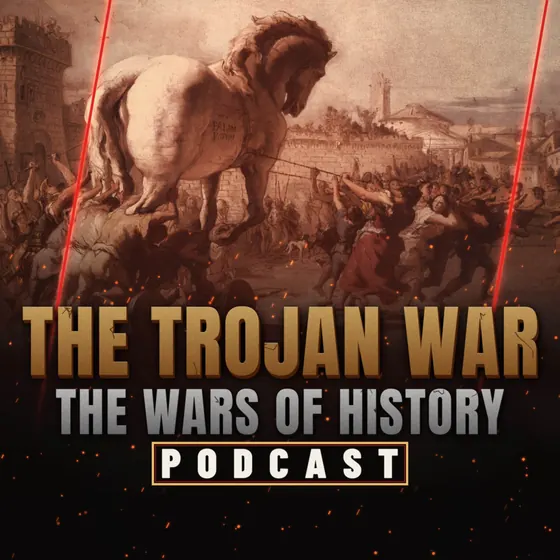
Was the Trojan War real? For nearly three thousand years it has shaped how people think about courage, pride, grief and the cost of war, and it gave us the phrases "Trojan horse" and "Achilles' heel."
Was the Trojan War real? For nearly three thousand years it has shaped how people think about courage, pride, grief and the cost of war, and it gave us the phrases "Trojan horse" and "Achilles' heel." In this hour-long episode of The Wars Of History Podcast, Mike tells the complete story of the Trojan War, the legend and the history, in a relaxed, personal deep dive that keeps a clear line between what the poets sang and what archaeologists have actually dug up.
We begin with the sources: Homer, the Iliad and the Odyssey, the lost Epic Cycle, the Athenian playwrights and Virgil's Aeneid, plus Milman Parry's discovery of how oral poets composed epic poetry from memory.
Then the legend's beginning: the wedding of Peleus and Thetis, Eris and the golden apple, the Judgement of Paris, Helen of Sparta and the Oath of Tyndareus, and the sacred host-and-guest bond of xenia that Paris broke. We look at the version where Helen never reached Troy at all, and Marlowe's "face that launched a thousand ships."
Next, the gathering of the Greeks: Agamemnon of Mycenae, Menelaus, Odysseus faking madness, Achilles hidden on Skyros, the fleet stuck at Aulis and Iphigenia (told gently), the Catalogue of Ships, Protesilaus, Philoctetes and nine years of siege.
The heart of the episode is the Iliad: the anger of Achilles, the quarrel over Briseis, Helen on the walls of Troy, the duel of Paris and Menelaus, Glaucus and Diomedes trading armor, Hector's farewell to Andromache and their son, the embassy to Achilles and his choice between a long life and eternal fame, Patroclus in borrowed armor, the Shield of Achilles, the duel of Achilles and Hector, and King Priam's night journey to Achilles' tent, one of the greatest scenes in world literature.
After that comes the fall of Troy: Penthesilea and Memnon, the death of Achilles and the origin of the Achilles' heel, Epeius and the Trojan Horse, Sinon, Laocoon's warning, Cassandra, Euripides' The Trojan Women, Odysseus meeting Achilles among the dead, and Aeneas carrying his father out of the burning city.
Then we step into archaeology: Frank Calvert, Heinrich Schliemann and the so-called Treasure of Priam, the nine cities of Troy, Dorpfeld, Carl Blegen and Manfred Korfmann, Troy Six and Troy Seven A, the Hittite archives, Wilusa, Alaksandu, the Ahhiyawa, the Luwian seal and the Late Bronze Age collapse. We finish with seven lessons from the Trojan War about pride, small choices, seeing your enemy as human, who really pays for war, trust and trickery, how stories change, and why legend and history both matter.
-
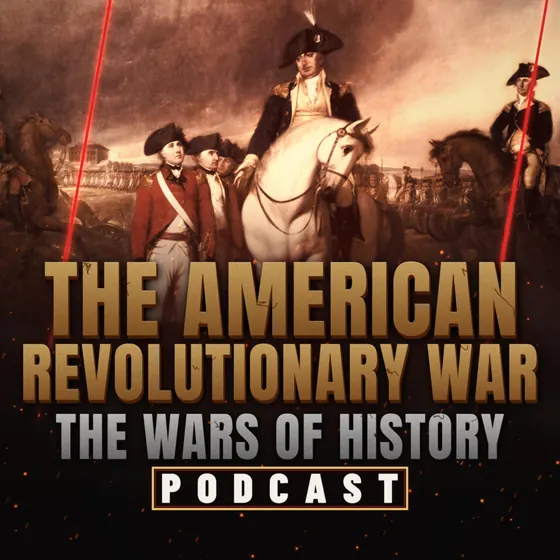
How did thirteen quarrelling colonies defeat the strongest empire of the eighteenth century? In this hour-long episode of The Wars Of History Podcast, Mike tells the full story of the American Revolutionary War, from the first taxes to the Treaty of Paris, in a relaxed, personal deep dive that keeps every side in view: Patriots and Loyalists, British soldiers and Hessians, Native nations, enslaved and free Black Americans, and the women who kept the cause alive.
How did thirteen quarrelling colonies defeat the strongest empire of the eighteenth century? In this hour-long episode of The Wars Of History Podcast, Mike tells the full story of the American Revolutionary War, from the first taxes to the Treaty of Paris, in a relaxed, personal deep dive that keeps every side in view: Patriots and Loyalists, British soldiers and Hessians, Native nations, enslaved and free Black Americans, and the women who kept the cause alive.
We begin with the French and Indian War and its huge debt, the Proclamation Line and Pontiac's War, then the Stamp Act, "no taxation without representation," the Sons and Daughters of Liberty, the Townshend Acts, the Boston Massacre (and John Adams defending the soldiers in court), the Tea Act, the Boston Tea Party and the Intolerable Acts.
Next, the war begins: the First Continental Congress, Paul Revere, William Dawes and Samuel Prescott, Lexington and Concord, Emerson's "shot heard round the world," Bunker Hill, George Washington taking command, the Olive Branch Petition, and Henry Knox hauling the cannon of Fort Ticonderoga to Boston. Then Thomas Paine's Common Sense, Abigail Adams asking her husband to "Remember the Ladies," the Declaration of Independence and its contradictions, and John Adams predicting fireworks every year.
Then the darkest year: the British fleet at New York, Washington's general orders on "the fate of unborn Millions," the Battle of Long Island and the escape in the fog, Nathan Hale, the retreat across New Jersey, Washington's private fear that "the game is pretty near up," Paine's The American Crisis, the crossing of the Delaware, and the victories at Trenton and Princeton.
After that comes the turning point: Burgoyne and Saratoga, Benjamin Franklin in Paris and the French alliance, the hard winter at Valley Forge, Baron von Steuben's drill, the Marquis de Lafayette, Monmouth and the Molly Pitcher legend. We step back to meet Lord Dunmore's proclamation, the First Rhode Island Regiment, the spy James Armistead Lafayette, Deborah Sampson, the Loyalists and William Franklin, Joseph Brant and the divided Iroquois Confederacy, Edmund Burke, and John Paul Jones at sea.
Finally, the war in the South and the end game: Charleston and Camden, Benedict Arnold's betrayal at West Point, Kings Mountain, Cowpens, Francis Marion the Swamp Fox, Nathanael Greene, the French fleet at the Chesapeake, Alexander Hamilton at Yorktown and the surrender of Cornwallis. Then the Treaty of Paris, the Black Loyalists and the Book of Negroes, the Newburgh Conspiracy, Washington resigning his commission, the Constitution, and the revolutions in France and Haiti. Then eight lessons from the war.
-
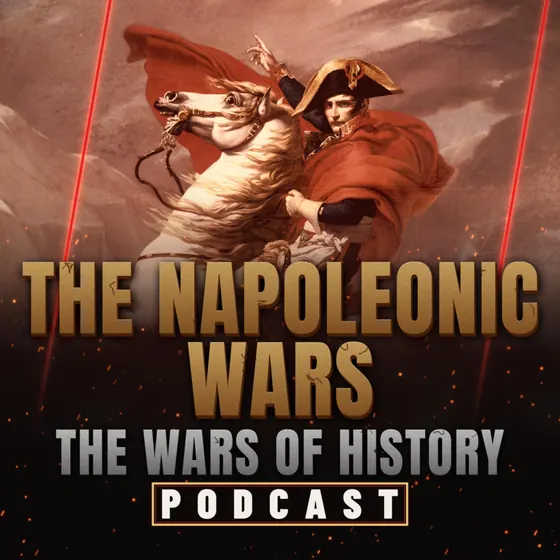
How did an unknown artillery officer from Corsica end up crowning himself Emperor of the French and ruling most of Europe, and how did it all fall apart? In this hour-long episode of The Wars Of History Podcast, Mike tells the full story of the Napoleonic Wars, the roughly twenty years of conflict that grew out of the French Revolution and ended at Waterloo in 1815.
How did an unknown artillery officer from Corsica end up crowning himself Emperor of the French and ruling most of Europe, and how did it all fall apart? In this hour-long episode of The Wars Of History Podcast, Mike tells the full story of the Napoleonic Wars, the roughly twenty years of conflict that grew out of the French Revolution and ended at Waterloo in 1815. It's a conversational deep dive that goes well beyond the video, with more stories, more people and their own words, and it keeps every side in view: French soldiers and Spanish guerrillas, Russian peasants and Haitian revolutionaries, emperors and the ordinary families who paid the price.
We start with the French Revolution, the levée en masse and young Napoleon Bonaparte: his Corsican childhood, the siege of Toulon, Joséphine, the Italian campaign and the expedition to Egypt, including the Battle of the Pyramids, the Rosetta Stone, Nelson's victory at the Battle of the Nile and the coup that made Napoleon First Consul.
Next comes Napoleon the ruler: the Napoleonic Code, the Concordat, the Legion of Honor and his police state, the Haitian Revolution and Toussaint Louverture, the restoration of slavery, the Louisiana Purchase, the execution of the Duke of Enghien, the coronation at Notre Dame and Beethoven's Eroica. Then Trafalgar, Nelson's "England expects" signal and his death aboard HMS Victory.
Then the empire at its height: the corps system and the marshals Ney, Murat and Davout, Ulm, Austerlitz (the Battle of the Three Emperors), Pitt's "roll up that map", the end of the Holy Roman Empire, Jena and Auerstedt, Eylau, Friedland, the raft at Tilsit, the Duchy of Warsaw and the Continental System.
After that, the long unravelling: the Peninsular War in Spain and Portugal, the Dos de Mayo uprising and Goya's The Third of May, the birth of guerrilla warfare, Sir John Moore at Corunna, Wellington and the Lines of Torres Vedras, the "Spanish ulcer", independence movements in Latin America, Aspern-Essling, Wagram, Andreas Hofer and the marriage to Marie Louise.
Finally, the fall: the 1812 invasion of Russia, Borodino, the burning of Moscow, the retreat and the Berezina crossing, the Battle of the Nations at Leipzig, abdication and exile on Elba, the Hundred Days, Waterloo, Wellington's "nearest run thing", and Napoleon's last years on Saint Helena. Casualty figures are given as ranges, because estimates vary. We close with the Congress of Vienna, Clausewitz and a longer look at what these wars still teach us.
-
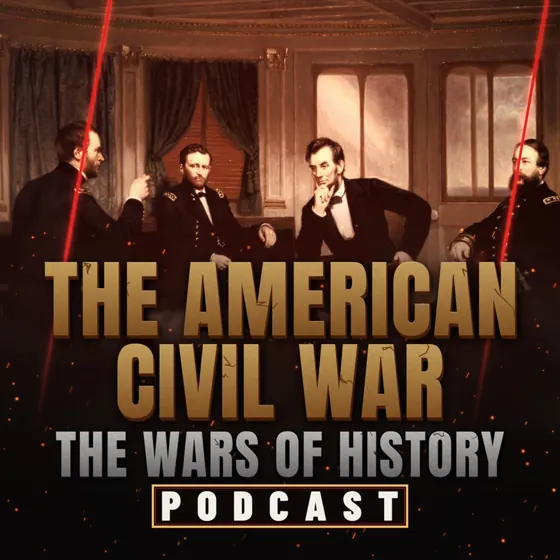
Could a nation founded on liberty survive while four million people were held in slavery? In this hour-long episode of The Wars Of History Podcast, Mike tells the full story of the American Civil War, from 1861 to 1865: the war that ended slavery in the United States, saved the Union and rewrote the Constitution.
Could a nation founded on liberty survive while four million people were held in slavery? In this hour-long episode of The Wars Of History Podcast, Mike tells the full story of the American Civil War, from 1861 to 1865: the war that ended slavery in the United States, saved the Union and rewrote the Constitution. It's a conversational deep dive that goes well beyond the video, with more stories, more people and their own words, and it keeps every side in view, from soldiers in blue and gray to enslaved people who freed themselves and the families waiting at home.
We start with the road to war: slavery and the cotton economy, the Missouri Compromise and the Compromise of 1850, the Fugitive Slave Act, Frederick Douglass and "What to the Slave Is the Fourth of July?", Harriet Tubman and the Underground Railroad, Uncle Tom's Cabin, Bleeding Kansas, the caning of Charles Sumner, the Dred Scott decision, Lincoln's "house divided" speech and John Brown's raid on Harpers Ferry.
Next comes secession. We cover the election of 1860, the Confederate States of America and Jefferson Davis, what the secession declarations and the Cornerstone Speech actually said about the cause of the war, Lincoln's "better angels" first inaugural, the bombardment of Fort Sumter, Robert E. Lee's choice, the border states, the birth of West Virginia and the First Battle of Bull Run (Manassas), where Stonewall Jackson got his name.
Then the war widens: the Anaconda Plan and the Union blockade, George McClellan, the Monitor and the Virginia at Hampton Roads, Ulysses S. Grant and "Unconditional Surrender" at Fort Donelson, Shiloh, the fall of New Orleans, the Seven Days, Antietam (the bloodiest day in American history), Clara Barton, Lincoln's letter to Horace Greeley and the Emancipation Proclamation.
After that, the turning point: the United States Colored Troops, the 54th Massachusetts at Fort Wagner, Sergeant William Carney, the Combahee River Raid, Chancellorsville, Gettysburg, Little Round Top and Pickett's Charge, the siege of Vicksburg, the draft riots, the Richmond bread riot and the Gettysburg Address.
Finally, the end and the aftermath: Grant against Lee from the Wilderness to Petersburg, Sherman's capture of Atlanta and the March to the Sea, Lincoln's reelection and second inaugural ("with malice toward none"), Appomattox Court House, Lincoln's assassination, Juneteenth, the Thirteenth, Fourteenth and Fifteenth Amendments, and Reconstruction and its betrayal. Death tolls are given as ranges, because estimates vary. We close with a longer look at what this war still teaches us.
-
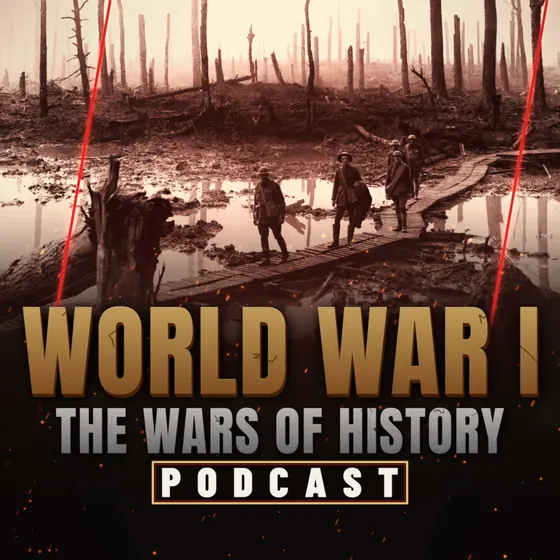
Between 1914 and 1918, a quarrel in the Balkans grew into the first truly global industrial war. Somewhere between fifteen and twenty-two million people died, four empires fell, and the modern world was born.
Between 1914 and 1918, a quarrel in the Balkans grew into the first truly global industrial war. Somewhere between fifteen and twenty-two million people died, four empires fell, and the modern world was born. In this hour-long episode of The Wars Of History Podcast, Mike tells the complete story of the First World War in a calm, conversational deep dive that gives every side its due: Britain, France, Germany, Austria-Hungary, Russia, the Ottoman Empire, Italy, Serbia and the United States, plus the colonial soldiers and laborers from India, Africa, China and Indochina who are too often forgotten.
We begin with Europe in 1914: royal cousins, the alliance system, the dreadnought race, empires, nationalism and the Balkan powder keg. Then the assassination of Archduke Franz Ferdinand in Sarajevo, the July Crisis and Germany's "blank cheque," the Schlieffen Plan, the invasion of Belgium, the "scrap of paper," and Sir Edward Grey's famous line about the lamps going out across Europe.
Next, 1914 and 1915: Louvain, the First Battle of the Marne and the Paris taxis, Tannenberg, Serbia's early victories, the race to the sea, the Christmas Truce, and Laurence Binyon's "For the Fallen." We look at life in the trenches, gas at Ypres (told without graphic detail), John McCrae's "In Flanders Fields," Khudadad Khan and the Indian Army, the tirailleurs, and the Chinese Labour Corps.
Then the global war: Gallipoli seen by Anzacs and Turks, Mustafa Kemal, the Armenian Genocide, the Arab Revolt and Lawrence of Arabia, Sykes-Picot and the Balfour Declaration, Kut and Mesopotamia, East Africa and its porters, the Italian front, Serbia's winter retreat, and Flora Sandes.
After that comes 1916: Verdun and "They shall not pass," the first day of the Somme and the Pals Battalions, the first tanks, the Brusilov Offensive, Jutland, the blockade and Germany's turnip winter, total war, women in munitions factories, and Edith Cavell's "patriotism is not enough."
Then 1917: the Lusitania, unrestricted U-boat warfare, the Zimmermann Telegram, Woodrow Wilson's "safe for democracy," the Russian Revolution and Lenin, the French army mutinies, Vimy Ridge, Passchendaele, Caporetto, and Wilfred Owen's "Anthem for Doomed Youth."
Finally, 1918 and the peace: the German Spring Offensive, Haig's "backs to the wall," Amiens and the Hundred Days, the Harlem Hellfighters, the armistice at the eleventh hour, the Spanish flu, the Treaty of Versailles, the fall of four empires, the League of Nations and the broken promise of self-determination. We close with eight lessons from World War I.
-
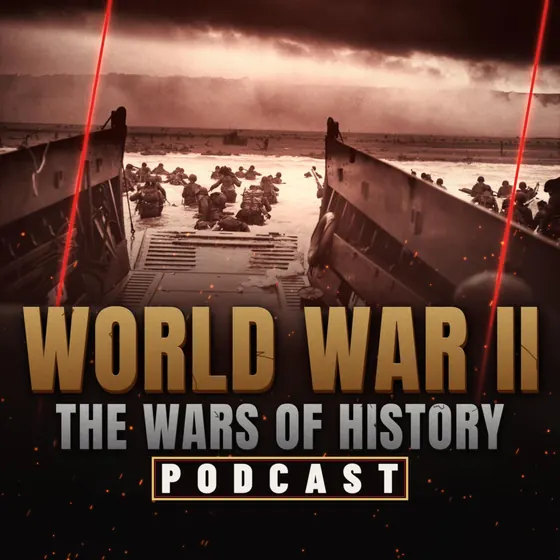
It was the largest and deadliest conflict in human history, and it still shapes the world we live in. In this hour-long episode of The Wars Of History Podcast, Mike tells the full story of the Second World War, from 1939 to 1945 and from Europe to Asia. It's a conversational deep dive that goes well beyond the video, with more stories, more people and their own words.
It was the largest and deadliest conflict in human history, and it still shapes the world we live in. In this hour-long episode of The Wars Of History Podcast, Mike tells the full story of the Second World War, from 1939 to 1945 and from Europe to Asia. It's a conversational deep dive that goes well beyond the video, with more stories, more people and their own words. It treats it as a truly global war: the Eastern Front and the Pacific, China's eight-year struggle against Japan, and the colonial troops from India, Africa and beyond who fought for the Allies. We hear from leaders, soldiers, resisters and survivors on every side.
We begin with the road to war: the Treaty of Versailles, the Great Depression, Mussolini and the invasion of Ethiopia, Hitler's rise and the Nuremberg Laws, Japan's seizure of Manchuria, the Marco Polo Bridge, Shanghai and the Nanjing Massacre (told without graphic detail), Munich and "peace for our time", and the Nazi-Soviet Pact.
Next comes the war in Europe: the invasion of Poland, Katyn, the Winter War, Blitzkrieg and the fall of France, Dunkirk, Churchill's "blood, toil, tears, and sweat" and "finest hour", de Gaulle, the Battle of Britain and the Polish pilots of 303 Squadron, the Blitz, Lend-Lease and the Battle of the Atlantic.
Then the war goes global: Operation Barbarossa, the siege of Leningrad, the defense of Moscow, Pearl Harbor and FDR's "date which will live in infamy", the fall of Singapore, Bataan, the Burma Railway, Midway, Guadalcanal, Kokoda, China's war under Chiang Kai-shek and Mao Zedong, the British Indian Army, African soldiers, Kohima and Imphal, and the Bengal famine.
After that, the turning points: El Alamein, Stalingrad and Kursk, the home fronts, Rosie the Riveter, the Night Witches, Bletchley Park and Alan Turing, the Navajo code talkers, Japanese American internment, the Tuskegee Airmen, the White Rose and the resistance. The Holocaust is told respectfully and factually: the Warsaw Ghetto Uprising, the rescuers and the Righteous Among the Nations, Anne Frank, and Elie Wiesel.
Finally, victory and its price: Monte Cassino, D-Day and Eisenhower's "Great Crusade", Operation Bagration, the Warsaw Uprising, the bombing debate over Dresden and Tokyo, the Battle of the Bulge, the fall of Berlin and VE Day, Leyte Gulf, Manila, Iwo Jima, Okinawa, the Manhattan Project, Hiroshima and Nagasaki (both sides of the debate), Hirohito's broadcast and Japan's surrender. Casualty figures are given as ranges, because estimates vary. We close with Nuremberg, the United Nations, the Iron Curtain, the end of empires and a longer look at what this war still teaches us.
-
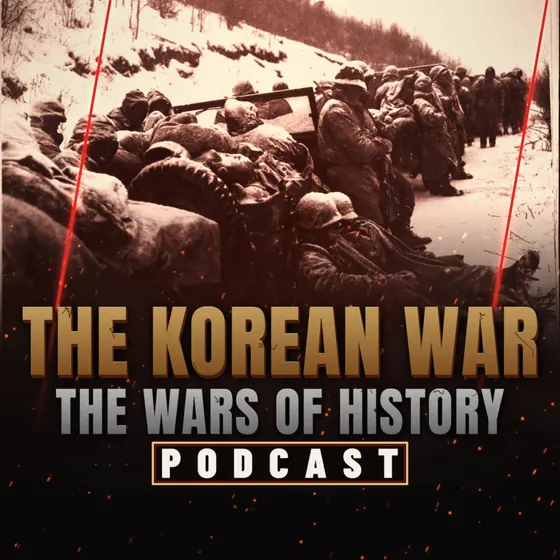
The guns stopped in July 1953, but no peace treaty was ever signed, and the line where the fighting froze still splits one people into two countries. In this hour-long episode of The Wars Of History Podcast, Mike tells the full story of the Korean War, often called the Forgotten War, from Japanese colonial rule to the demilitarized zone (DMZ) of today.
The guns stopped in July 1953, but no peace treaty was ever signed, and the line where the fighting froze still splits one people into two countries. In this hour-long episode of The Wars Of History Podcast, Mike tells the full story of the Korean War, often called the Forgotten War, from Japanese colonial rule to the demilitarized zone (DMZ) of today. It's a conversational deep dive that gives a fair hearing to North and South Korean civilians and soldiers, China and its People's Volunteers, the United States and the sixteen United Nations nations that sent combat troops, and the millions of divided families still waiting for an ending.
Next, the invasion of June 25, 1950: Stalin's approval, the fall of Seoul, the Han River bridge, refugees on the roads, the Bodo League killings and North Korean occupation, the UN Security Council vote during the Soviet boycott, Truman's decision, Task Force Smith, No Gun Ri, and the Pusan Perimeter. We meet General Paik Sun-yup, the student soldiers of Pohang, and troops from Britain, Turkey, Canada, Australia, Ethiopia, Colombia and more, plus army desegregation and Puerto Rico's Borinqueneers.
Then MacArthur's gamble at Inchon, the recapture of Seoul, the march to the Yalu, China's decision to enter the War to Resist America and Aid Korea, Peng Dehuai, Mao Anying, the Chosin Reservoir, and the Hungnam evacuation, including the SS Meredith Victory, which carried some fourteen thousand refugees.
After that, Ridgway's revival of the Eighth Army, Truman firing MacArthur, "old soldiers never die," Omar Bradley's "wrong war" testimony, the Imjin River and Kapyong, Heartbreak Ridge and Pork Chop Hill, Triangle Hill (Shangganling), MiG Alley and its secret Soviet pilots, MASH helicopters, the bombing of the North, and the prisoner-of-war deadlock at Panmunjom.
Finally, Eisenhower, Stalin's death, Rhee's prisoner release, the armistice of July 27, 1953, Operation Big Switch, and the war's human cost. We look at Korean War orphans and adoption, the 1983 KBS broadcasts that reunited more than ten thousand families, North-South family reunions, the Joint Security Area and DMZ wildlife, the 2018 Panmunjom summit, remains coming home, and two Koreas that took very different paths. We close with eight lessons from the war.
-
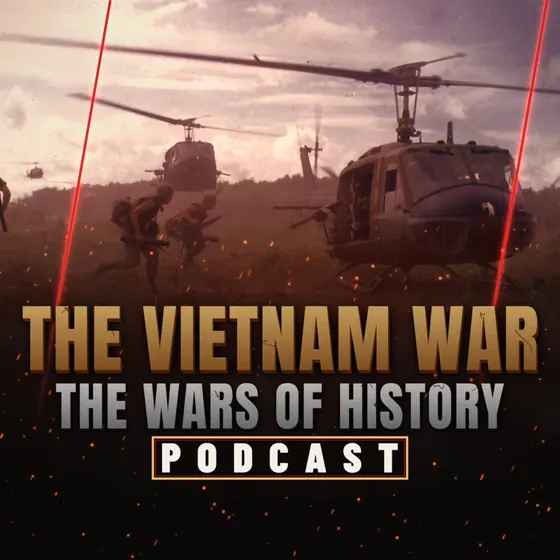
It lasted twenty years, split a country in Southeast Asia in two, and turned American living rooms into a nightly window on war. In this hour-long episode of The Wars Of History Podcast, Mike tells the full story of the Vietnam War, from French colonial rule to the last helicopters over Saigon.
It lasted twenty years, split a country in Southeast Asia in two, and turned American living rooms into a nightly window on war. In this hour-long episode of The Wars Of History Podcast, Mike tells the full story of the Vietnam War, from French colonial rule to the last helicopters over Saigon. It's a conversational deep dive that listens to every side: American soldiers and protesters, North and South Vietnamese, the civilians caught in between, the refugees who fled, and the veterans who came home.
Next comes the First Indochina War, Eisenhower's domino theory, General Vo Nguyen Giap and the siege of Dien Bien Phu, the Geneva Accords and the division of Vietnam at the seventeenth parallel. We look at the land reform campaign in the North, Ngo Dinh Diem in the South, the cancelled 1956 elections, the National Liberation Front (the Viet Cong), the Ho Chi Minh Trail, Kennedy's advisers, the Buddhist crisis and the 1963 coup.
Then the escalation under Lyndon Johnson: the Gulf of Tonkin incident and resolution, Operation Rolling Thunder, the Marines landing at Da Nang, the Battle of the Ia Drang Valley, Westmoreland's attrition strategy and the body count, the Cu Chi tunnels, Agent Orange, the draft, and allied troops from South Korea, Australia and New Zealand. We hear Muhammad Ali's refusal and Martin Luther King Jr.'s sermon against the war, alongside the many Americans who supported it.
After that, 1968: the siege of Khe Sanh, the Tet Offensive, the attack on the American Embassy, the battle for Hue, Walter Cronkite's "stalemate" broadcast and Johnson's decision not to run again. We tell the story of My Lai with care, and of Hugh Thompson, the helicopter pilot who stepped in to protect villagers.
Then Nixon's war: Vietnamization, the silent majority, the draft lottery, Cambodia, Kent State and Jackson State, the Pentagon Papers, John Kerry's testimony, the Easter Offensive, the Christmas bombing, the Paris Peace Accords, Operation Homecoming and the Hanoi Hilton prisoners, and Le Duc Tho refusing the Nobel Peace Prize. Finally, the fall of Saigon in 1975, Operation Frequent Wind, re-education camps, the boat people, the Khmer Rouge, the Vietnam Veterans Memorial and Maya Lin, and the long road to reconciliation. We close with seven lessons from the war.
-
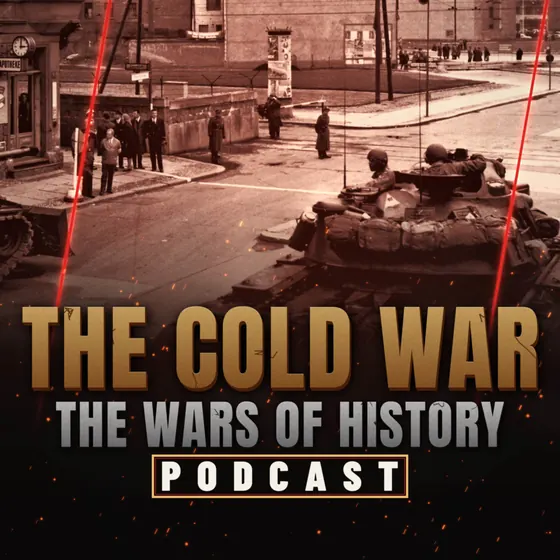
For more than forty years, the United States and the Soviet Union prepared for a war that would have ended civilization, and that war never came. In this hour-long episode of The Wars Of History Podcast, Mike tells the full story of the Cold War from 1945 to 1991, a struggle of ideas, spies, rockets and nerves that shaped borders, governments and daily life across the planet.
For more than forty years, the United States and the Soviet Union prepared for a war that would have ended civilization, and that war never came. In this hour-long episode of The Wars Of History Podcast, Mike tells the full story of the Cold War from 1945 to 1991, a struggle of ideas, spies, rockets and nerves that shaped borders, governments and daily life across the planet. It's a conversational deep dive that gives a fair hearing to the American side, the Soviet side, and the many non-aligned countries that refused to choose either camp.
We begin with American and Soviet soldiers shaking hands on the Elbe, the huge Soviet losses of World War II, Yalta, Churchill's Iron Curtain speech, George Kennan's Long Telegram and containment, the Truman Doctrine and the Marshall Plan. Then the Berlin Blockade and Airlift, Gail Halvorsen the "Candy Bomber", the founding of NATO, the first Soviet atomic bomb and Mao's victory in China.
Next, the Cold War turns hot in the Korean War, the hydrogen bomb and mutually assured destruction, duck and cover drills, McCarthyism and the Red Scare, Stalin's Gulag and Khrushchev's secret speech, and Eisenhower's "Chance for Peace" speech. We look at the CIA-backed coups in Iran and Guatemala, the Bandung Conference, the Non-Aligned Movement of Nehru, Nasser, Sukarno, Nkrumah and Tito, the Suez Crisis, the Hungarian Revolution of 1956 and Sputnik.
Then the Kitchen Debate, the U-2 incident, Yuri Gagarin, the Bay of Pigs, the building of the Berlin Wall, Kennedy's "Ich bin ein Berliner" and the Cuban Missile Crisis, including Khrushchev's "knot of war" letter, Black Saturday, Vasily Arkhipov aboard submarine B-59, the secret Turkey deal, the hotline and the test ban treaty.
After that come the Prague Spring, the Sino-Soviet split, Nixon in China, SALT and détente, the Apollo 11 Moon landing and the Apollo-Soyuz handshake, the Helsinki Accords, Andrei Sakharov and Václav Havel. We cover the proxy wars in Congo, Chile, Angola, Ethiopia, Central America and Afghanistan, the Olympic boycotts and Poland's Solidarity movement.
Finally, 1983's war scare (Korean Air Lines Flight 007, Stanislav Petrov's false alarm, Able Archer), Reagan and Gorbachev, glasnost, perestroika, Chernobyl, the Geneva and Reykjavik summits, "tear down this wall," the Baltic Way, Tiananmen Square, the fall of the Berlin Wall, the Velvet Revolution, German reunification, the 1991 coup and the end of the Soviet Union. We close with seven lessons from the Cold War.
-
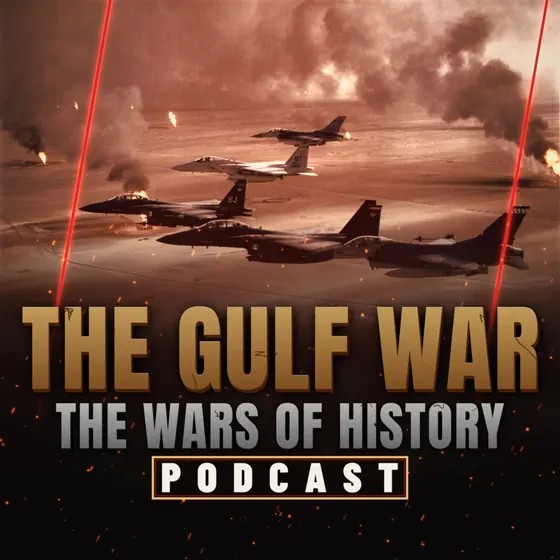
In August 1990, Saddam Hussein's army overran Kuwait in a matter of hours. Six months later, a coalition of around thirty-five nations drove it out in one of the most watched wars in history, the first broadcast live around the world.
In August 1990, Saddam Hussein's army overran Kuwait in a matter of hours. Six months later, a coalition of around thirty-five nations drove it out in one of the most watched wars in history, the first broadcast live around the world. In this hour-long episode of The Wars Of History Podcast, Mike tells the full story of the Gulf War of 1990 and 1991 in a calm, conversational deep dive that gives a fair hearing to Kuwaitis, Iraqis, coalition troops, the divided Arab world and the civilians caught in between. No victory lap: just what happened, what went wrong and what is still debated.
We begin with the background: Kuwait's history and the old Iraqi claim, the Iran-Iraq War and its huge debts, Saddam Hussein and the Baath Party, the oil quotas dispute, the Rumaila oil field, and the disputed meeting with US ambassador April Glaspie.
Next, the invasion and occupation: the fall of Kuwait City on 2 August 1990, the Emir's escape, the annexation, life and resistance under occupation, hundreds of thousands of migrant workers fleeing to Jordan, India's huge evacuation airlift, Western "human shields," and the Nayirah incubator testimony that later proved unreliable.
Then the world responds: UN Security Council Resolutions 660, 661 and 678, President George H. W. Bush's "This will not stand," King Fahd's decision to invite foreign troops, Operation Desert Shield, Egypt and Syria joining the coalition, the split Arab League, Jordan, Yemen and the PLO, Saddam's "linkage," the close vote in Congress, and the failed Baker-Aziz talks in Geneva.
After that, Operation Desert Storm: CNN live from Baghdad, "the mother of all battles," stealth jets and smart bombs, Iraqi civilians without power and water, the Amiriyah shelter tragedy, Scud missiles on Israel and Saudi Arabia, Israel's restraint, the Patriot debate, the Gulf oil spill, the Battle of Khafji, press pools, POWs, yellow ribbons and the women who served.
Then the ground war: Norman Schwarzkopf's "left hook," mass Iraqi surrenders, 73 Easting and the Republican Guard, the Highway of Death debate, the liberation of Kuwait City, "Kuwait is liberated," the ceasefire, casualty estimates and the Safwan helicopter decision.
Finally, the aftermath: Kuwait's burning oil wells, why the coalition didn't march on Baghdad, the crushed Shia and Kurdish uprisings, Operation Provide Comfort and the no-fly zones, UN weapons inspections, years of sanctions and Oil for Food, the expulsion of Palestinians and Yemenis, Kuwait's missing, Gulf War illness, and the road to the Iraq War of 2003. We close with nine lessons from the Gulf War.
-
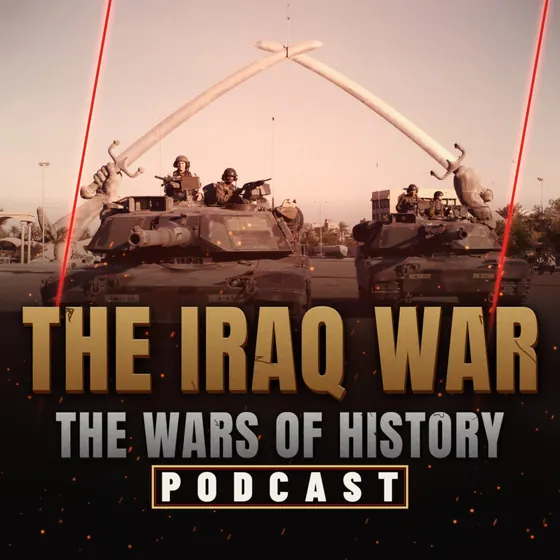
In March 2003, an American-led coalition invaded Iraq, and within three weeks Saddam Hussein's government was gone. What followed was nearly nine years of war that divided nations, transformed the Middle East and is still argued about today. In this hour-long episode of The Wars Of History Podcast, Mike tells the full story of the Iraq War as carefully and fairly as possible.
In March 2003, an American-led coalition invaded Iraq, and within three weeks Saddam Hussein's government was gone. What followed was nearly nine years of war that divided nations, transformed the Middle East and is still argued about today. In this hour-long episode of The Wars Of History Podcast, Mike tells the full story of the Iraq War as carefully and fairly as possible. It's a conversational deep dive that goes beyond the video and gives a voice to everyone involved: Iraqi civilians, Sunni and Shia Arabs, Kurds and minorities, American, British and other coalition soldiers, Iraqi interpreters, and the supporters and critics of the war.
We begin with Iraq itself: Mesopotamia, the borders drawn after the First World War, Saddam Hussein's rise and police state, the Iran-Iraq War, the Anfal campaign and the Halabja chemical attack, the 1990 invasion of Kuwait, the Gulf War, the crushed 1991 uprisings, no-fly zones, sanctions, Oil for Food and the UN weapons inspectors.
Next comes the road to war after September 11: the "axis of evil", the case for war, the WMD intelligence (aluminum tubes, the Niger uranium claim, Curveball and the mobile labs), Britain's 45-minute dossier, Resolution 1441, Hans Blix and Mohamed ElBaradei, Colin Powell at the UN, the global protests of February 15, 2003, and the legal debate.
Then the invasion and occupation: shock and awe, the Kurdish Peshmerga, Nasiriyah, Basra, the thunder runs into Baghdad, the Firdos Square statue, the looting of the National Museum, "Mission Accomplished", Paul Bremer, de-Baathification and the dissolving of the Iraqi army.
After that, the long war: the insurgency, Zarqawi and al-Qaeda in Iraq, Muqtada al-Sadr and Grand Ayatollah Sistani, Fallujah, the Abu Ghraib scandal (no graphic detail), Saddam's capture and trial, the purple-finger elections and the new constitution. We look at the WMD intelligence failure through the Duelfer Report, the US investigations and Britain's Butler Review. Then the Samarra bombing and the sectarian civil war, the displacement of millions, the surge, General Petraeus, the Anbar Awakening, and the 2011 withdrawal.
Finally, the aftermath and verdict: the rise of ISIS, the fall and liberation of Mosul, the Yazidis, the Kurdish independence referendum and Iran's influence. Casualty estimates are given as ranges, with their sources: the US Department of Defense, Iraq Body Count, the Iraq Family Health Survey, PLOS Medicine and The Lancet. We also hear Kofi Annan and the Chilcot Inquiry alongside the case made by the war's supporters, and close with a longer look at what this war still teaches us.
One place for everything
Watch & Listen
The First American Defeat: How the Vietnam War Changed History | The Wars Of History
The Wars Of History on YouTube
Painted history documentaries about the wars that shaped the world.
The Wars Of History Podcast
The Leader Files Podcast
Full-length stories
Podcast Episodes
The full-length audio stories, about an hour each. Watch or listen on YouTube.
About
The wars that shaped the world
The Wars Of History tells the stories of the conflicts that changed the map and the way people live. Each file follows one war from start to finish: how it began, the turning points, and why it still matters today.
Every YouTube episode is a visual documentary with painted scenes for each chapter. The podcast is the long-form version, made for listening on the go. Pick a war above and start anywhere.
Our sister show
The Leader Files
Our sister show tells the true stories of the greatest leaders who ever lived.